
How to Build a Sales Team That Wins in an AI World

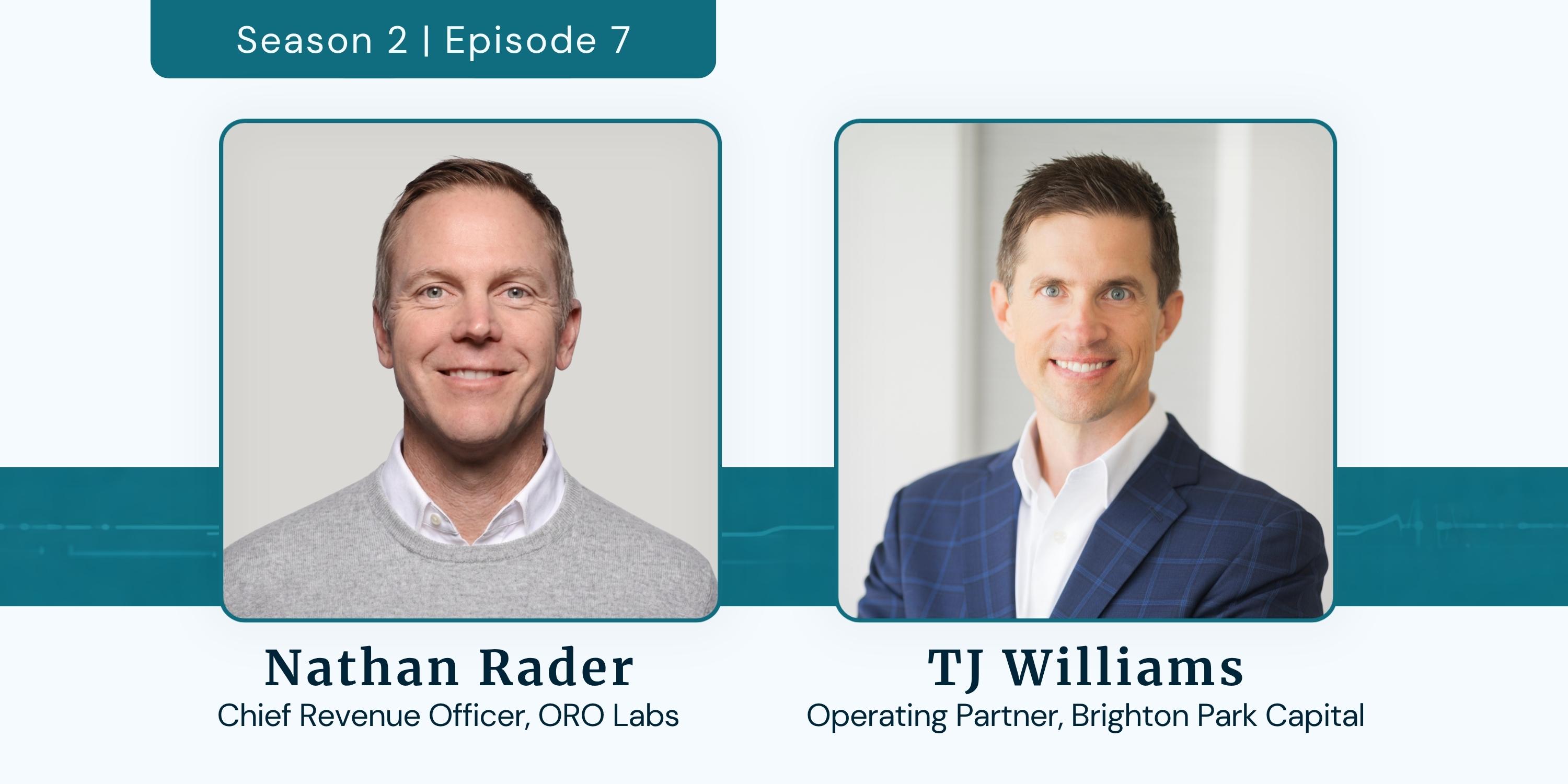
TJ Williams


My first tech sales job out of college was at IBM, selling large Unix servers and storage in the late 90s. My GTM tech stack: Lotus Notes for email, Lotus 1-2-3 for spreadsheets, and a White Pages phone book for prospecting—bonus points if you remember any of those. My laptop battery lasted 30 minutes, calls dropped constantly, and Wi-Fi didn't exist. Yet somehow, deals got done. Every generation of salespeople inherits a new set of tools and figures out how to win with them. The generation before me closed deals on typewriters and sent contracts through the mail. We figured out email and mobile phones. The current generation is navigating AI.
Today's AI-powered sales stack can prospect accounts, book meetings, build presentations, take notes, update your CRM, generate account plans, and predict deal outcomes, and it can do all of this with minimal human intervention. It raises a fair question: do we even need salespeople anymore? The answer is an unambiguous yes. People still want to do business with other people—the day my AI agent is negotiating with your AI agent is the day I happily step aside. We are not there yet, and I don't expect we ever will be.
The more interesting question, and the one I hear most often from GTM leaders, is not whether salespeople are needed, but what the best ones will look like going forward and how companies should build for that future today. As a growth equity partner focused on go-to-market strategy, I speak with sales leaders across industries every week, and while the debate is lively, a few things are becoming clear.
1. Invest in Your SDR/BDR Functions as a Talent Pipeline
The SDR and BDR functions have long served as the foundation for enterprise sales careers. They are where reps learn how to prospect, handle objections, earn conversations, and develop the discipline that separates good salespeople from great ones.
In an era of AI-assisted everything, some are questioning whether these roles are becoming obsolete. This is the wrong conclusion. There is no substitute for the fundamentals developed in these early-career roles. AI tools can automate the mechanics of prospecting, but they cannot replicate the judgment that comes from doing the work. That judgment is what closes enterprise deals: knowing when to push, when to listen, and how to read a room.
The imperative for leadership is to continue investing in the SDR and BDR functions as a development program, not just a headcount lever. The goal is fewer hires, but significantly better ones. The bar for who gets in and who gets developed should be higher than ever. Define a clear path to Account Executive. Measure ramp time. Build in coaching structures. The organizations that do this well will build a talent advantage that compounds over time.
The real danger is not in moving too slowly on AI, but in moving too fast on headcount. If companies eliminate SDR and BDR roles en masse in pursuit of AI-driven efficiency, they risk hollowing out the talent pipeline that has produced great enterprise sellers for decades. Great account executives are not hired fully formed–they are built through years of hands-on learning. Finding that talent is already harder than it used to be; strong verbal communication and relationship-building skills are increasingly rare in a generation raised on asynchronous digital communication. Shrink the funnel too aggressively today and in five to ten years the pool of experienced enterprise sellers becomes very small and very expensive.
2. Hire for AI Fluency: The Forward-Deployed Engineer with Selling Skills
The profile of an effective enterprise salesperson is changing fundamentally. The best enterprise sellers will look less like traditional quota carriers and more like a new kind of operator: commercially minded, deeply comfortable with AI tooling, able to configure and customize it to their workflows, and instinctively reaching for it to sharpen every stage of the sales motion. Think of them as forward-deployed engineers with selling skills.
This means hiring criteria need to evolve. In addition to the classic markers of sales aptitude like curiosity, resilience, competitive drive, and executive presence, teams should now screen for genuine enthusiasm for AI tools and demonstrated willingness to experiment with new technologies. These candidates ask how their company's AI platform works, not just what it does. They run their own prompts to generate research on accounts. They analyze their own call recordings with AI coaching tools without being asked. They think about process optimization as naturally as they think about pipeline.
The companies scaling most effectively are those embedding this expectation early—in job descriptions, during onboarding, and in performance reviews. It is not enough for reps to tolerate the new tools. They need to champion them. Over time, this AI-native capability compounds: reps who engage deeply with these platforms will develop competitive intuitions about what works that slower-moving peers simply will not have.
3. Free Your Sellers to Do What Humans Do Best
Perhaps the most important promise of AI-led sales enablement is not scale, but focus. The average enterprise sales rep spends a disproportionate share of their week on tasks that do not require the uniquely human capabilities that drive revenue: writing templated follow-up emails, researching accounts, updating CRM fields, building decks from scratch. AI tools can now handle much of that burden, and the best-in-class platforms are getting genuinely good at it.
What that unlocks is time, and the question becomes what your reps do with it. The answer should be the highest-leverage activities in enterprise selling: developing a genuine understanding of a customer's strategic priorities, building multi-threaded relationships across the buying committee, co-creating solutions with champions, and having the unhurried conversations that shift a prospect's thinking. These are not things AI can replicate. They are the irreducible human contributions to complex sales cycles, and they are where deals are ultimately won or lost.
The unlock here is significant. Freeing a talented Account Executive to spend an additional five to eight hours per week on high-quality customer conversations, rather than on administrative overhead, is not a marginal gain. The impact on pipeline and customer retention can be transformative. The organizational design question is how to structure roles, tools, and accountability frameworks so that this time reallocation happens, rather than getting absorbed by internal meetings.
A Note on the Data: Productivity Gains Are Still Forthcoming
In my conversations with sales leaders across the industry, we have yet to see clear evidence that teams leaning heavily into AI tools and workflows have meaningfully moved the needle on rep productivity, at least not as measured by quota attainment. Early adopters report efficiency gains in task execution, planning, and outreach, but the aggregate signal on topline growth remains mixed.
There is a short window for companies to pull ahead and treat AI adoption as an operational discipline, rather than a technology purchase. Soon, however, every competitor will be running a similar AI playbook. If you and your competitors are running the same AI motion and competing for the same deals, efficiency gains rather than revenue growth are where you are more likely to see the benefit.
AI adoption is not optional, so lean in now and maximize your competitive advantage while you can. This means tracking the right metrics: not just how much time AI saves, but how reps are reinvesting that time. Are they spending more hours in high-quality customer conversations? Are pipeline conversion rates improving? Is the ramp time for new hires coming down?
We are still early. The tools available today and what sales organizations are building with frontier models are meaningfully better than what existed twelve months ago. Sales leaders who build the measurement infrastructure and create real accountability around how their teams engage in the modern motion will be the ones with a short-term advantage and best positioned to remain competitive as others catch up.
This material is provided for informational purposes only and reflects the personal views of the author as of the date hereof. The views expressed are qualitative in nature and are not intended to be relied upon as a representation of investment criteria or decision-making in any particular situation. Investing involves risk, including the possible loss of capital, and past experience is not indicative of future results. This presentation does not constitute an offer to sell, or a solicitation of an offer to buy, any interests in any fund managed or advised by Brighton Park Capital Management L.P. (“BPC”) or any of its affiliates nor does it constitute nor does it constitute an offer, commitment, or agreement by BPC or any of its affiliates to provide financing or enter into any transaction. Any offer of interests will be made solely pursuant to the applicable definitive documentation and pursuant to applicable law. The information provided in this material should not be considered as an offer, an inducement, or a solicitation to deal, by anyone in any jurisdiction where it would be unlawful or where the person providing it is not qualified to do so.
.jpg)
.jpg)



Subscribe for the Latest Updates
Receive the latest news and insider updates directly from Brighton Park Capital.